

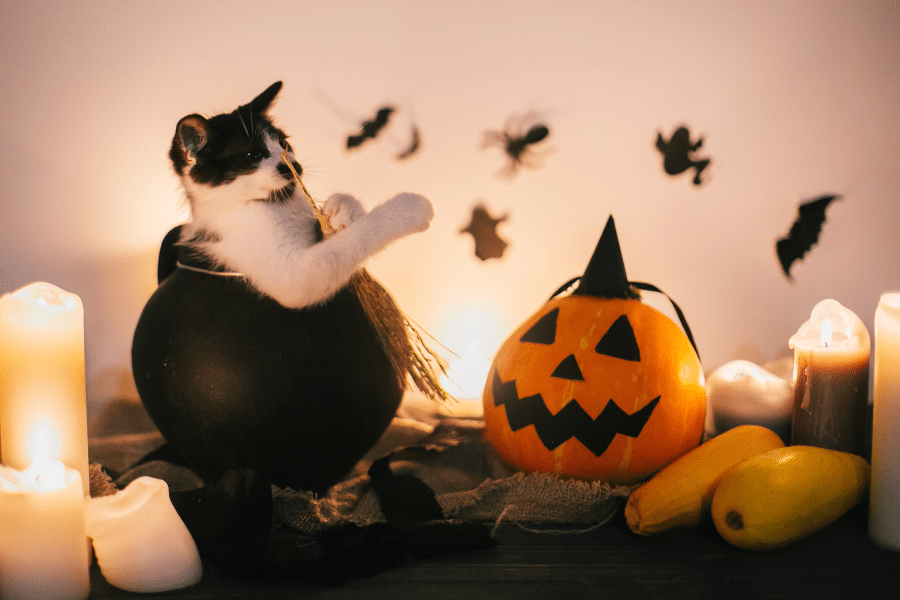
Halloween can be an exciting time for people, but the costumes, decorations, visitors, and unusual noises may feel overwhelming to cats. A cat that normally feels safe at home may hide when the doorbell rings, chew on a dangling decoration, or become frightened by unfamiliar people. Some seasonal items can also pose risks if swallowed or knocked over. With a little planning, you can enjoy the holiday while keeping your cat comfortable and protected. Loving Care Animal Hospital in Palatine, IL, wants pet owners to understand the common indoor hazards that can affect cats during Halloween. This guide covers costume safety, decorations to watch, ways to reduce stress, and signs that mean your cat may need veterinary care.
What Halloween Hazards Should Cat Owners Watch For?
The main Halloween risks for cats include small objects they may swallow, decorations they can become tangled in, open doors that allow them to escape, and unfamiliar visitors that cause stress. Keeping your cat in a secure, quiet space and removing dangerous items can help prevent many problems.
Cats are curious by nature. They may bat at hanging decorations, investigate bags, chew on strings, or climb into boxes used for costumes and party supplies. Even an item that looks harmless can become a concern if it breaks apart or gets caught around a paw or neck.
Before Halloween begins, check your home for these hazards:
- Loose strings and ribbons: These can become tangled or be swallowed.
- Small decorations: Beads, plastic spiders, bells, and other tiny objects may pose a choking or swallowing risk.
- Fake cobwebs: Fibers can catch on claws or be chewed and swallowed.
- Electrical cords: Cats may bite cords or pull on lights, potentially causing injury.
- Candles and open flames: A curious cat can knock over a candle or burn its fur or paws.
- Open doors and windows: Frequent visitors increase the chance that a cat may slip outside.
- Plastic bags and packaging: Cats may chew, swallow, or become trapped in loose packaging.
Place decorations out of reach, secure cords, and keep packaging and craft supplies stored away. Check the floor regularly for fallen pieces, especially after decorating or hosting visitors.
Are Halloween Costumes Safe for Cats?
Most cats do not need to wear a Halloween costume. Some tolerate a lightweight accessory for a short time, but many feel restricted or stressed by clothing. If you choose to dress your cat, use a simple, comfortable item that does not cover the face or restrict movement, and remove it at the first sign of discomfort.
A costume should never prevent your cat from walking, jumping, grooming, or breathing normally. Avoid outfits with tight elastic, dangling strings, loose decorations, or small pieces that can be chewed off. Face coverings and hats can interfere with vision and hearing, making a frightened cat even more unsettled.
Watch for signs that your cat wants the costume removed:
- Freezing in place or walking unusually
- Flattened ears or a tucked body posture
- Repeated pawing, biting, or scratching at the outfit
- Hiding, struggling, or trying to escape
- Rapid breathing, unusual panting, or excessive drooling
Do not force your cat to wear a costume to take a photo. A themed blanket, festive background, or simple photo beside a decoration is a safer choice for cats that dislike clothing. Always supervise your cat if an accessory is being worn, and remove it before leaving the room.
Which Halloween Decorations Are Dangerous for Cats?
Some decorations can injure cats even when they are placed indoors. Cats may climb onto shelves, knock over objects, or investigate anything that moves or makes noise. Choose stable decorations and avoid items that can break, burn, tangle, or be swallowed.
Be careful with string-like decorations
Fake cobwebs, ribbons, yarn, tinsel-like strands, and hanging cords can be particularly risky. If swallowed, string-like material can cause a serious intestinal problem. Never pull a string from your cat’s mouth or rear end if you see one. Contact a veterinarian for instructions.
Keep flames and electrical items secure
Candles, decorative lights, and electronic displays should be placed where your cat cannot reach them or knock them over. Battery-powered decorations can also pose a hazard if a cat chews through the casing or swallows a battery. Button batteries and other small batteries can cause serious injury and require immediate veterinary advice if swallowed.
Use this decorating checklist:
- Choose sturdy decorations that cannot easily fall or shatter.
- Secure electrical cords and keep them away from chewing.
- Avoid decorations with small removable parts.
- Keep candles and other open flames out of reach, or choose flameless alternatives.
- Store spare batteries, tools, and packaging in closed containers.
- Check decorations regularly for damage or missing pieces.
If your cat chews a cord, swallows a decoration, or may have swallowed a battery, contact a veterinarian promptly. Do not wait for symptoms to appear.
How Can You Keep Your Cat Calm During Halloween?
Cats rely on familiar routines and safe hiding places. Loud conversations, doorbells, music, and frequent visitors can make them feel threatened. Preparing a quiet room before the activity starts gives your cat a place to retreat instead of feeling trapped or overwhelmed.
Set up a comfortable space with:
- Fresh water and your cat’s usual food, if needed
- A clean litter box
- A familiar bed or blanket
- A covered hiding spot or open carrier
- A few familiar toys
- A closed door to reduce noise and prevent escape
Let your cat decide whether to hide or explore. Do not pull them out from under furniture or insist that they meet visitors. Children and guests should be told not to chase, pick up, or corner a frightened cat.
Keep your cat indoors, even if they normally spend time outside. The extra activity and repeated opening of the front door can increase the chance of escape. Make sure windows and screens are secure, and ask visitors to close doors behind them.
A hypothetical example
Imagine a cat that usually greets family members but begins hiding under a bed when Halloween visitors arrive. The household sets up a quiet room with the cat’s familiar bed, water, litter box, and toys, then keeps guests away from that space. The cat is able to rest without being handled or startled, while the family enjoys the celebration.
This hypothetical example shows that a calm environment can be more helpful than trying to encourage a cat to participate. Allowing a cat to choose when to come out helps reduce pressure during a busy evening.
Are Halloween Treats and Party Foods Safe for Cats?
Many foods and treats intended for people are not suitable for cats. Halloween candy can contain ingredients that are harmful, while wrappers and small packaging can create additional risks. Keep all sweets and party food in closed containers, and ask guests not to feed your cat from the table.
Be especially careful with:
- Chocolate: It contains substances that can be toxic to cats.
- Sugar-free sweets: Some may contain ingredients that are dangerous to pets. Check the product packaging and contact a veterinarian if your cat eats one.
- Alcoholic drinks: Even small amounts can be harmful.
- Fatty or heavily seasoned foods: These may upset your cat’s stomach.
- Candy wrappers: Swallowed wrappers can cause choking or digestive problems.
- Bones and food scraps: These can cause injury or other complications.
Keep treat bowls on high, secure surfaces only if your cat cannot access them, and do not assume that a small amount is harmless. If your cat eats something potentially toxic, contact a veterinarian promptly and provide the product name and estimated amount. Do not induce vomiting or give home remedies unless a veterinarian specifically instructs you to do so.
What Should You Do If Your Cat Eats a Decoration or Escapes?
If your cat swallows a decoration, chews a battery, or may have eaten something unsafe, contact a veterinarian as soon as possible. The right response depends on the object, material, amount, and your cat’s condition. Waiting for symptoms can delay needed care.
Seek veterinary advice promptly if you notice:
- Repeated vomiting or gagging
- Drooling or difficulty swallowing
- Refusal to eat or sudden loss of appetite
- Unusual tiredness or hiding that is different from normal
- Straining to pass stool or signs of belly pain
- Suspected swallowing of string, ribbon, a battery, or a sharp object
If string is visible from your cat’s mouth or rear end, do not pull it. Pulling may damage internal tissues if the string is caught in the digestive tract.
If your cat escapes, search the immediate area calmly and safely. Check hiding places near your home and alert household members to keep doors closed. Contact local animal shelters or veterinary clinics if your cat remains missing. Once your cat returns, check for visible injuries and contact a veterinarian if they seem unwell or may have been injured outdoors.
When Should You Contact a Veterinarian?
Contact a veterinarian in Palatine if your cat may have swallowed a hazardous item, eaten unsafe food, been burned, or developed unusual symptoms. Some problems are not obvious immediately, so do not rely only on how your cat looks at first.
Seek urgent veterinary care if your cat has trouble breathing, collapses, has a seizure, experiences severe bleeding, or becomes suddenly unresponsive. Suspected battery ingestion, swallowing of string, or contact with a potentially toxic substance also warrants prompt veterinary guidance.
For a mild concern, such as skin redness after wearing an accessory, remove the item and contact your veterinarian if the irritation persists or worsens. Take a photo of the product label or keep the packaging available if your cat may have chewed or swallowed part of an item. This can help the veterinary team understand the possible risk.
Loving Care Animal Hospital in Palatine, IL, can help guide pet owners on their cat’s care needs. If you are unsure whether your cat’s Halloween exposure needs attention, explain what happened, when it occurred, and any symptoms you have noticed.
How Can You Make Halloween Safer for Your Cat?
The safest Halloween plan is one that keeps your cat secure, gives them space to relax, and prevents access to decorations and food that could cause harm. Your cat does not need to wear a costume or meet guests to be part of the holiday. A familiar room and a calm routine may be the best celebration for them.
Before Halloween, remember to:
- Keep your cat indoors and secure doors and windows.
- Avoid costumes that restrict movement or cause stress.
- Put away strings, fake cobwebs, small decorations, and loose batteries.
- Keep candy, party food, and wrappers out of reach.
- Provide a quiet room where your cat can retreat.
- Supervise your cat around decorations and visitors.
- Contact a veterinarian promptly after suspected ingestion or injury.
A little preparation can help you enjoy the holiday without putting your cat at unnecessary risk. Pay attention to changes in behavior, and allow your cat to stay in their safe space whenever they choose.
Loving Care Animal Hospital in Palatine, IL, encourages cat owners to plan ahead and seek veterinary guidance if a Halloween-related concern arises. Keeping your cat comfortable and protected is the most important part of a safe holiday.
Frequently Asked Questions
Q1: Should I dress my cat up for Halloween?
A: Only if your cat comfortably tolerates it. Many cats dislike costumes, and clothing can restrict movement or cause stress. A simple photo setup or festive blanket is a good alternative.
Q2: Are fake cobwebs dangerous for cats?
A: Yes, fake cobwebs and other string-like decorations can become tangled around paws or be swallowed. Swallowed strands can cause serious digestive problems. Keep them out of your cat’s reach and contact a veterinarian if you suspect ingestion.
Q3: What should I do if my cat eats Halloween candy?
A: Remove any remaining candy and keep the packaging so you can identify the ingredients. Contact a veterinarian promptly for advice, especially if the candy contains chocolate or an ingredient that may be toxic. Do not try to induce vomiting unless a veterinarian tells you to.
Q4: How can I stop my cat from escaping when trick-or-treaters arrive?
A: Keep your cat in a secure, quiet room before visitors begin arriving. Provide familiar bedding, water, and a litter box, and ask everyone in the household to keep the door closed. Make sure windows and screens are secure as well.
Q5: When should I contact Loving Care Animal Hospital about a Halloween hazard?
A: Contact a veterinarian if your cat may have swallowed a decoration, battery, string, or unsafe food, or if you notice unusual symptoms after an incident. Trouble breathing, collapse, seizures, and severe weakness require urgent veterinary care.

Unable to locate Global Block : 69